
A very powerful tool to use is Daily Trajectory Report to achieve the best potential of ourselves.

The Daily Trajectory Report — Your Most Powerful Tool for Consistent Growth
Most people end their day the same way they started it — reactively.
They worked hard. They were busy. But they cannot clearly articulate what they planned, what they achieved, and what needs to happen tomorrow. One day bleeds into the next. Weeks pass without a clear sense of direction. And the gap between potential and actual output quietly widens — not because of laziness, but because of the absence of a simple, daily accountability structure.
The Daily Trajectory Report is the most practical tool I have found to close that gap.
It takes less than ten minutes a day. It works at every level of your life — professional, personal, and relational. And over time, its compounding effect on your clarity, consistency, and momentum is significant.
Here is how it works.
Where to Use It
The Daily Trajectory Report is not just a professional tool. Use it in three dimensions of your life:
With your seniors and colleagues — for professional work, project accountability, and team alignment.
With yourself — for personal goals, habits, and growth targets. This is perhaps the most important use. Most people are accountable to their employer but not to themselves.
With your parents and spouse — for family relationships and shared responsibilities. When families track their commitments together — even informally — the quality of those relationships improves. Intentions become visible. Effort becomes acknowledged.
The Format
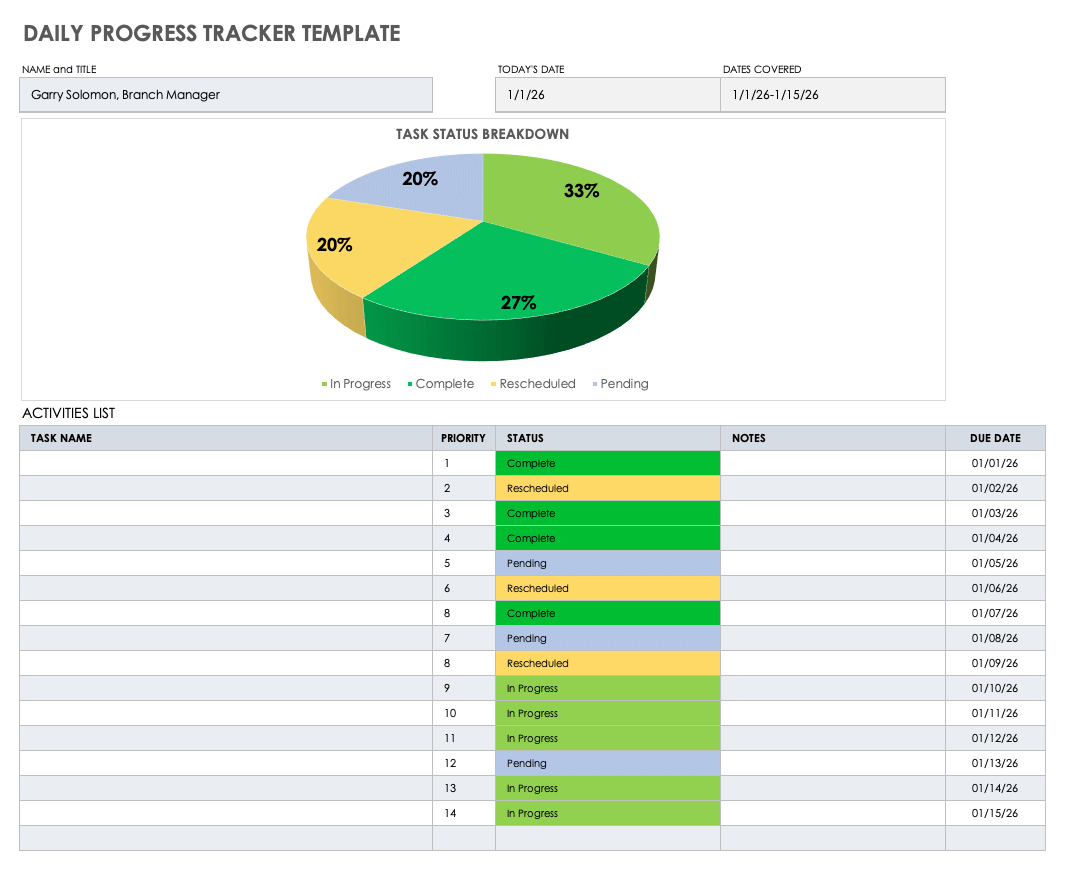
The Daily Trajectory Report has two parts:
Part A — Retrospection
🎯 Daily Planned Targets What did you plan to do today? List your targets — the commitments you made to yourself at the start of the day.
☑️ Progress Achieved What did you actually accomplish? Be honest. Not what you intended — what actually got done.
🔮 Tomorrow’s Targets What are the next actions? What carries forward from today? What is new for tomorrow?
Part B — Introspection
What worked best? Identify the one or two things that made today productive — a habit, a decision, an environment, a mindset. Name it so you can repeat it.
What needs improvement? Identify where you fell short — not to punish yourself, but to learn. A day that teaches you something is never a wasted day.
How to Make It Stick
A tool only works if it is used consistently. Here is the setup that makes this sustainable:
Set two calendar reminders — 8:00 AM and 8:00 PM, every day, seven days a week. The morning reminder sets your daily targets. The evening reminder closes the loop — retrospection and introspection before the day ends.
Update the report daily — including Sundays. Momentum is built through consistency, not intensity. A brief Sunday entry — even if it simply notes that you took the day off — keeps the habit alive.
If nothing was planned, say so. Write “taking an off today” if that is the truth. The report must exist regardless. The discipline of showing up to the report — even on rest days — is part of what builds the habit.
Privacy is respected. If you are using this with a team or mentor and are not comfortable sharing every detail — that is completely fine. A brief summary works just as well: “X% of targets achieved. Identified three things that worked. Two areas for improvement.” The habit matters more than the detail.
Why It Works

The Daily Trajectory Report is not just a productivity tool. It is a mindfulness practice — a daily act of paying attention to your own life.
It builds momentum — small daily wins, tracked and acknowledged, compound into significant progress over weeks and months.
It creates consistency — the single most underrated quality of high performers. Not brilliance. Not talent. Showing up and reporting, day after day.
It develops self-awareness — when you regularly examine what worked and what did not, you begin to understand yourself more clearly. Your patterns become visible. Your blind spots shrink.
And perhaps most importantly — it connects your daily actions to your larger purpose. When you know what you planned, what you achieved, and what you are moving toward tomorrow — you are no longer just busy. You are building.
May Allah make this effort of ours a source of Maghfirah for us. Ameen.
— Kamran Zahid, CEO, Purposelee

Responses