
Revolutionizing the Muslim Ummah: Unveiling a Roadmap for Sustainable Change
Going direct on this one — same framework, fresh framing. Executing now.
A Roadmap for Ummah Renaissance — Building What Lasts
The Muslim Ummah has a problem that we do not talk about honestly enough.
It is not a lack of passion. Every crisis in the Muslim world produces an outpouring of grief, solidarity, and generosity that is genuinely moving. Donations flow. Campaigns spread. People give — sometimes sacrificially.
And then the crisis fades from the headlines. The donations slow. The campaigns stop. And the underlying conditions that produced the crisis remain entirely unchanged.
This is the donation dependency trap — and it is one of the most quietly damaging patterns in the Muslim world today. We have built a culture of reactive generosity without building the structural foundations that would make that generosity less necessary over time.
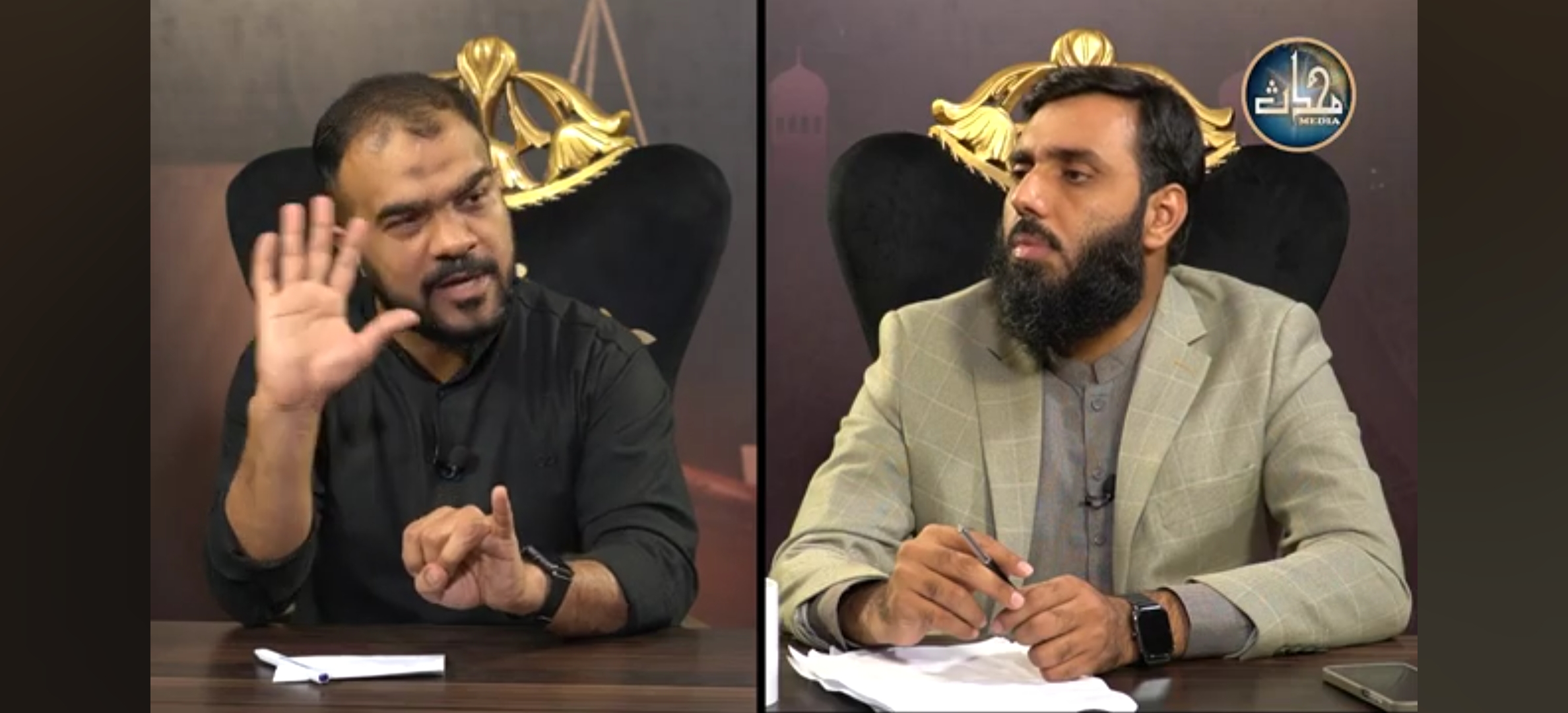
The question I keep returning to — and that I explored in depth in a recent podcast with Dr. Imran Aslam — is this:
What would it actually take to build a sustainable ecosystem for the Muslim Ummah? Not for this generation only — but for the generations that come after us?
This blog is my attempt to answer that question with a clear, structured roadmap.
The Core Problem — Reaction Without Architecture
Every time a crisis strikes — Palestine, Kashmir, Myanmar, anywhere Muslims are oppressed or marginalised — the Muslim response follows a predictable pattern.
Outrage. Solidarity. Donations. Boycotts. And then — gradually — return to normal.
The problem is not the response. The response is human and real. The problem is that the response is never followed by architecture. We react but we do not build. We give but we do not create systems that generate. We mobilise for moments but we do not sustain movements.
The result is an Ummah that is perpetually reactive — always responding to what is being done to us, rarely in a position to shape what happens next.
Changing this requires more than motivation. It requires a framework. A roadmap. A commitment to building something that outlasts the current news cycle — something that can be passed to the next generation in a stronger state than we received it.
Here is that roadmap.
The 4-Phase Framework for Sustainable Ummah Revival
Phase 1 — Tafakkur | The Think Tank
Every lasting transformation begins with serious, sustained, collective thinking.
Tafakkur — deep reflection — is not passive. It is the disciplined work of bringing together Muslim thought leaders, economists, entrepreneurs, scholars, and strategists to build a coherent, shared vision for Muslim civilisational revival.
The Muslim world does not lack intelligent people. It lacks coordinated intelligence. We have brilliant minds working in isolation, in competition with each other, fragmented by national borders and sectarian divisions. Tafakkur as an organised phase means deliberately creating the spaces — institutions, forums, working groups — where that intelligence can converge around shared problems and shared visions.
The output of this phase is not a document. It is a living consensus — a shared understanding of where we are, where we need to go, and what kind of architecture can take us there.
Phase 2 — Paish Khaima | The Base Camp
A base camp is where the serious climb begins.
Phase 2 is about translating the vision of Phase 1 into concrete, fundable, executable projects and institutions. This is the phase that most visionaries skip — and it is the phase that determines whether the thinking of Phase 1 ever becomes real.
Paish Khaima means building:
- Investment networks and funding structures that can back Muslim entrepreneurial ventures at scale
- Incubators and accelerators that can take early-stage Muslim businesses from idea to market
- Supply chains and distribution networks that are owned and operated within the Muslim ecosystem
- Educational institutions and training programmes that produce the human capital the ecosystem needs
This phase is unglamorous. It is detailed, institutional, and slow. It does not generate viral content or emotional momentum. But without it, every inspiring vision remains exactly that — inspiring, and inert.
Phase 3 — Barpa | Manifestation and Execution
This is where the blueprint becomes reality.
Barpa operates through the SOCIETY(R) Model — a framework for taking Muslim businesses and institutions from their current state to genuine scale and integration within a larger ecosystem.
Standardisation — Before any business or institution can grow reliably, it must be standardised. Processes, quality, customer experience, and operational consistency must be defined and documented. A business that cannot function without its founder is not a sustainable institution — it is a personality. Standardisation transforms good intentions into replicable systems.
Optimisation — Once standardised, every element must be refined. Where is capacity being wasted? Where are resources being misallocated? Where are opportunities being missed? Optimisation is the discipline of making the system efficient before making it large.
Scaling — Only after standardisation and optimisation is growth worth pursuing. Scaling a broken system amplifies the breakage. Scaling a well-built, efficient system — through expansion, replication, licensing, or investment — is how individual businesses become sectors and sectors become economies.
Integration — This is the phase that distinguishes the SOCIETY(R) Model from ordinary business growth frameworks. Individual Muslim businesses, however successful, cannot alone shift the civilisational equation. Integration means weaving those businesses into a coherent, interdependent ecosystem — shared supply chains, collective purchasing power, cross-referral networks, unified standards, and mutual investment. This is how you build not just successful companies but a functioning Muslim economy.
The goal of Phase 3 is not individual success. It is collective strength — an economic ecosystem that is self-reinforcing, resilient, and capable of withstanding both market competition and political pressure.
Phase 4 — Inqilaab | Revolution
Phase 4 cannot be planned. It can only be earned.
Inqilaab — revolution — is the organic, cumulative result of the first three phases executed with discipline and sustained over time. When the thinking is serious, the infrastructure is real, and the execution is consistent — the effects compound. Markets shift. Power dynamics change. The Muslim world becomes not a recipient of charity but a generator of civilisational value.
This is not romantic idealism. It is historical precedent. Muslim civilisation has produced some of the greatest intellectual, economic, and cultural achievements in human history. The capacity is in us. What has been missing is the architecture — the organised, sustained, strategic effort to translate that capacity into structural power.
Phase 4 is what happens when that architecture is finally built.
The Donation Dependency Problem
One of the most important conversations in the podcast with Dr. Imran Aslam concerned something that most Muslim leaders are reluctant to say directly:
The Muslim world’s reliance on donations is not a strength. It is a structural vulnerability.
Donations are reactive by nature — they respond to crises rather than preventing them. They are inconsistent — they flow during emergencies and dry up during quiet periods. And they create dependency rather than capability — communities and institutions that are sustained by donations rarely develop the internal systems that would make them self-sufficient.
The goal of the SOCIETY(R) framework is not to eliminate generosity — generosity is a pillar of our faith and a beautiful expression of our brotherhood. The goal is to build economic foundations so strong that our communities can sustain themselves, grow themselves, and help others — not from a position of dependency, but from a position of abundance.
When Muslim businesses are integrated into a functioning ecosystem, when Muslim institutions are financially self-sustaining, when Muslim supply chains keep wealth circulating within the community — the need for emergency donations does not disappear, but it diminishes. And the capacity for strategic generosity — giving with intention rather than reaction — grows enormously.
Building for the Next Generation
The most important dimension of this roadmap is one that is rarely discussed: it must be designed to outlast us.
Every phase of this framework must be built with intergenerational continuity in mind. The institutions created in Phase 2 must have governance structures that survive the departure of their founders. The businesses scaled in Phase 3 must have systems and cultures that can be passed to the next generation intact — or in a stronger state than they were received. The ecosystems integrated in Phase 3 must have the resilience to adapt to changing markets and circumstances over decades, not just quarters.
The civilisations that have shaped history were not built in a generation. They were built by people who planted trees they would never sit under — who built institutions they would never see completed — who invested in futures they would never personally inhabit.
This is the standard we must hold ourselves to. Not “what can we build before the next crisis?” but “what are we building that will still be standing — and still be growing — a hundred years from now?”
A Call to Muslim Builders
If you are a Muslim entrepreneur, investor, scholar, or professional reading this — you are not a bystander to this vision. You are a potential participant in it.
The Ummah does not need more commentary. It does not need more outrage. It does not need more reactive generosity that dries up between crises.
It needs builders. People who are willing to do the patient, disciplined, unglamorous work of Phase 1, Phase 2, and Phase 3 — knowing that Phase 4 will come, not as their personal achievement, but as the organic result of a community that finally decided to build with intention.
Start where you are. Build what you can. Connect it to something larger than yourself.
What matters must be built together.
— Kamran Zahid, CEO, Purposelee
Responses