
Strategic Time Management by Kamran Zahid

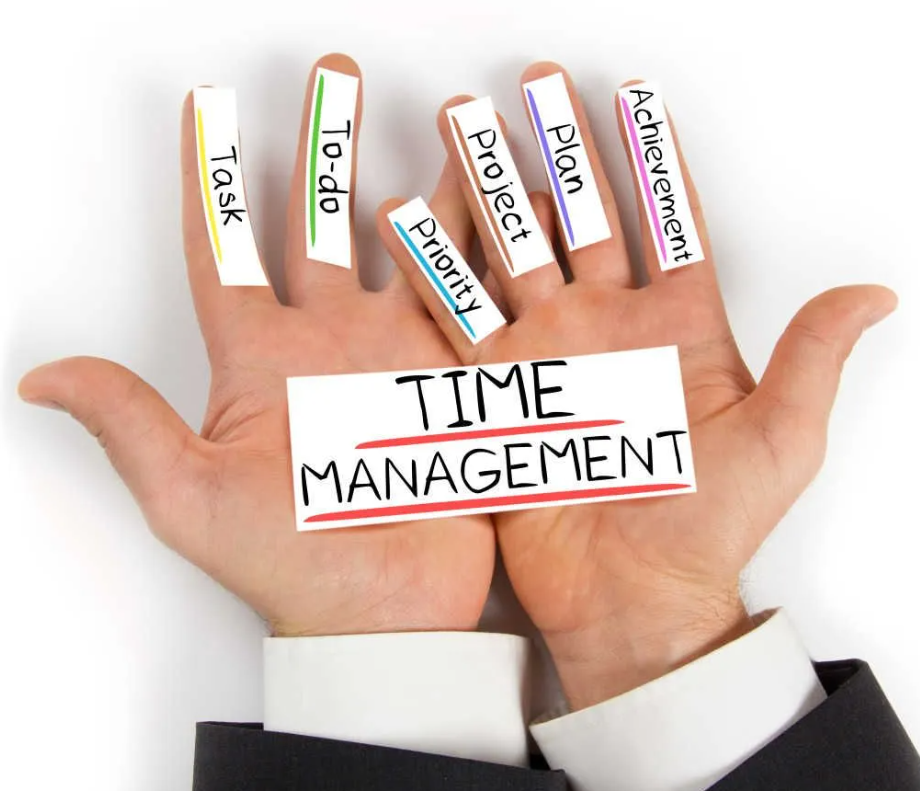
Time Is Not Your Problem. Your Relationship With Time Is.
There is a question I ask at the beginning of every Strategic Time Management session I have ever run.
“How many of you feel busy most of the time?”
Every hand goes up.
“How many of you feel productive most of the time?”
Almost no hands.
That gap — between feeling busy and being productive — is where most people’s lives silently drain away. And the tragedy is not that people are lazy. The tragedy is that most people are working incredibly hard on the wrong things, in the wrong order, without a system that connects their daily actions to anything that actually matters.
This is not a time management problem. This is a strategy problem.
Why Most Time Management Advice Fails
We have all read the books. We have downloaded the apps. We have colour-coded our calendars, tried the Pomodoro technique, bought the planners. And for a few weeks — sometimes even a few months — things improve. Then, quietly, we slide back.
The reason is simple: most time management systems are built around tasks, not around purpose. They help you do more things faster. They do not help you figure out which things deserve to be done at all.
A person without strategic clarity will always be busy. They will fill every hour with activity — meetings, messages, errands, urgencies — and arrive at the end of the day exhausted but with nothing truly built. They are not failing because they lack discipline. They are failing because they are executing without direction.
Strategic Time Management begins one level higher. Before the calendar. Before the to-do list. Before the system.
It begins with the question: What actually matters?
Time Is Not a Resource. It Is Your Life.
In our tradition, time is not treated as a productivity tool. It is treated as an amanah — a trust. The Prophet ﷺ said: “There are two blessings which many people waste: health and free time.” On the Day of Qiyamah, one of the first questions we will be asked is about our عمر — how we spent it.
This is not a metaphor. It is a framework.

When you understand that every hour you spend is an hour of your life — not a unit of productivity, but an irreplaceable portion of your existence on this earth — your relationship with time changes completely. You stop asking “how do I fit more in?” and start asking “what is this hour actually for?”
This shift in perspective is the foundation of Strategic Time Management. Everything else — the systems, the tools, the techniques — is built on top of this understanding.
What Makes Time Management “Strategic”
Most time management operates at the operational level — how do I get through today? Strategic Time Management operates at three levels simultaneously:
The Strategic Level — What are you building with your life? What are your highest-value roles and responsibilities? What does success look like across five, ten, twenty years? Without clarity here, every operational decision is essentially random.
The Managerial Level — How do you translate your strategic priorities into weekly and monthly rhythms? How do you allocate your time across your roles — as a professional, a parent, a learner, a contributor to your community — so that nothing important is chronically neglected?
The Operational Level — How do you structure your day? How do you protect deep work? How do you handle interruptions, urgencies, and the relentless demands of modern life without losing your direction?
Most people only ever work at the operational level. They manage today without ever connecting it to what they are building. Strategic Time Management connects all three levels into a coherent, living system.
The Pillars of How I Think About Time
Over years of studying, teaching, and personally practicing time management — and making plenty of expensive mistakes along the way — I have arrived at a few convictions that anchor everything I do.
Clarity before calendar. You cannot manage time you have not first defined. Before any system, you need to know your roles, your priorities, and your non-negotiables. A calendar filled without clarity is just organised chaos.
Energy management is as important as time management. An hour of deep, focused work is worth more than four hours of distracted, depleted effort. Protecting your peak energy — knowing when you are sharpest and guarding that time fiercely — is one of the highest-leverage moves you can make.
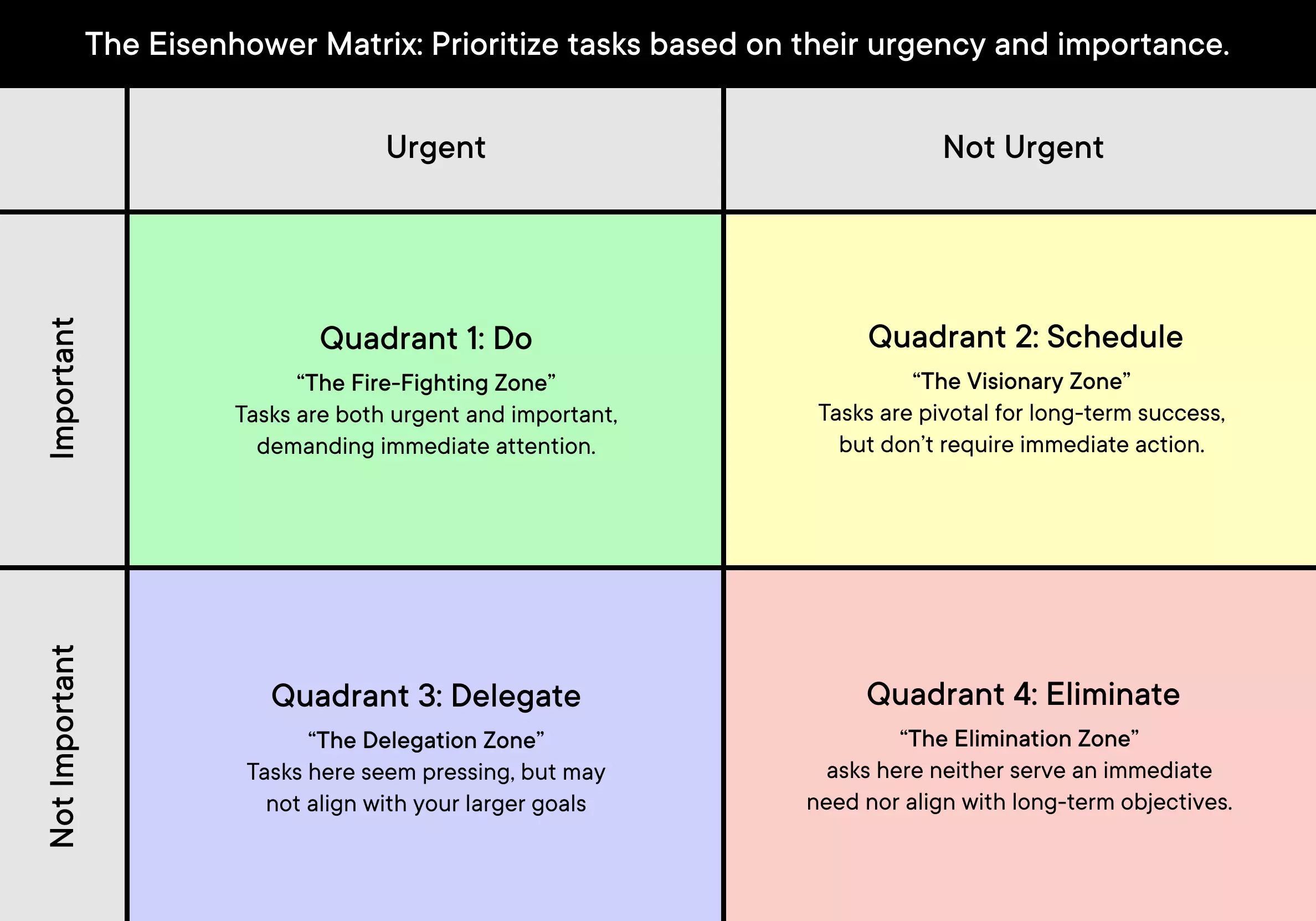
Not everything urgent is important. And not everything important is urgent. This distinction — which Eisenhower understood and Stephen Covey taught brilliantly — is the central battle of every productive life. The urgent screams. The important whispers. The discipline is learning to hear the whisper over the noise.
Defaults beat decisions. Every time you have to decide what to do next, you are spending energy. Build defaults — recurring time blocks for your most important work — so that the structure protects you from the chaos, not the other way around.
Review is the engine of improvement. A weekly review — honest, unhurried, structured — is the single habit that separates people who grow from people who stay stuck. Without review, you repeat the same week indefinitely. With it, you compound.
The Honest Truth About Discipline
Time management without discipline is decoration. You can have the most elegant system in the world — and if you cannot bring yourself to sit down and do the work when it is uncomfortable, when you are tired, when the phone is calling your name — the system is irrelevant.
Discipline is not punishment. It is not white-knuckling your way through life. It is the practice of repeatedly choosing what matters over what is merely comfortable. And like every practice, it improves with repetition.
I have found that discipline is much easier to maintain when it is rooted in something larger than productivity. When the work is connected to purpose — to your نیت, to what you are building for your family, your community, your Akhirah — showing up becomes an act of meaning, not just an act of will.
Where to Go From Here
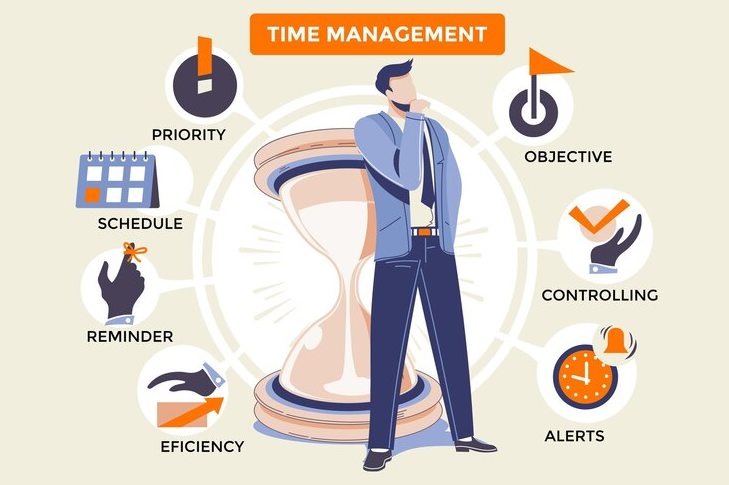
I have spent years developing a complete Strategic Time Management course — not a motivational talk, but a working system with exercises, frameworks, and tools that you can apply immediately to your own life.
If you are serious about transforming how you use your time, here is what I recommend:
Start with the course material. Download the manuals, print them, and work through the written exercises as you go. The exercises are where the real transformation happens — reading without doing produces very little change.
Watch the video sessions and move through them in sequence. Each session builds on the one before it.
Consider working with a coach. A system without accountability rarely sticks. If you want to accelerate your results, working with a skilled productivity coach who can hold you accountable and help you customise the framework to your life is one of the best investments you can make.
Two people I trust and recommend for this:
Syed Irfan Ahmed — reach him at +92 333 212 9515 or +92 335 242 7766
Yusuf Chughtai — reach him at yousafsco@gmail.com or +92 334 532 6966 / +92 303 516 1244
Time is the only resource that cannot be earned back. Every hour spent is gone — and what remains is either something built, something contributed, or something wasted.
The choice of which one it will be belongs entirely to you.
Let’s build something that matters.
— Kamran Zahid, CEO, Purposelee

Responses